}
Opening Hours
Mon – Fri 7:00 AM to 6:00 PM

DeutschFrançaisEnglish

}
Opening Hours
Mon – Fri 7:00 AM to 6:00 PM

DeutschFrançaisEnglish

Bilingual Kindergarten Munich – Benefits, Costs and Selection

Upbringing and education

A bilingual kindergarten in Munich offers children the opportunity to learn a second language from an early age. Especially in an international city like Munich, demand for bilingual kindergartens continues to grow steadily. But what are the advantages of such a concept, what costs do parents face, and where can bilingual kindergartens be found in Munich?

Why choose a bilingual kindergarten?

Choosing a kindergarten is not easy for most parents. In the first years of life, foundations are laid that influence your child’s entire future. The skills your child learns in kindergarten will stay with them for life and provide a strong basis for further development. For this reason, more and more parents are choosing a bilingual kindergarten. In an increasingly digital and interconnected world, language skills offer a significant advantage.

What is a bilingual kindergarten?

A bilingual kindergarten is based on education in more than one language. However, bilingual does not necessarily mean only two languages. Multilingual education is also considered bilingual. The most common languages in German bilingual kindergartens are German, English and French.

Definition and concept

Bilingual kindergartens usually follow the immersion principle. Educators consistently speak to the children in their native language, allowing children to immerse themselves playfully in the second language. Language development therefore takes place intuitively through everyday activities.

Differences from traditional kindergartens

Unlike traditional kindergartens, bilingual daycare centers focus on language development in two languages. Multilingual educators, cultural diversity and often internationally oriented concepts are key characteristics of these institutions.

What are the benefits of a bilingual daycare?

Bilingual kindergartens are often privately run. This usually results in a better staff-to-child ratio and more highly qualified personnel. In addition, bilingual kindergartens offer further advantages:

  • Children learn a second language naturally.
  • Intercultural competence increases.
  • Flexibility and language skills improve future educational and career opportunities.
  • Cognitive abilities are enhanced playfully.
  • Knowledge of different grammatical structures improves linguistic confidence.
  • Children gain an advantage when starting school.
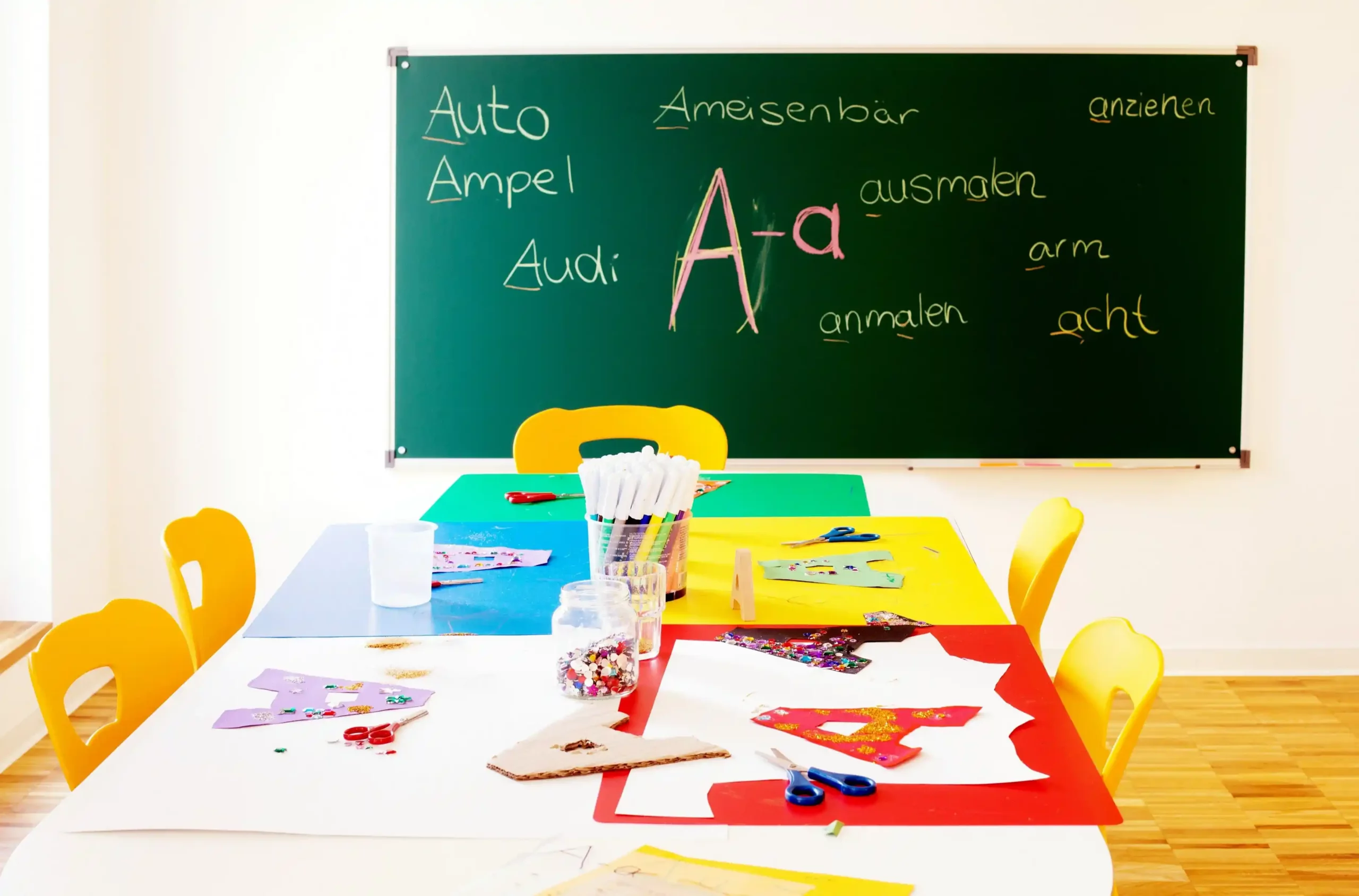
Tafel und Basteltisch zum Spracherwerb

Bilingual kindergartens in Munich

As a location for many international companies, Munich has a multilingual population. For families with a multilingual background, enrolling a child in a bilingual daycare is an obvious choice. However, bilingual daycare centers are also suitable for other families, especially those who travel frequently for work or plan stays abroad. Munich is the ideal location for this goal. With many high-quality private kindergartens, opportunities for bilingual education are excellent.

Which languages are offered?

In Munich, bilingual kindergartens offer various language combinations. The most common is German–English, but French, Spanish, Italian and Chinese are also available.

Bilingual kindergartens in Bogenhausen

Bogenhausen is known for its high density of international institutions. Demand for bilingual daycare centers is particularly high here. Both private and publicly funded kindergartens are available. Private bilingual kindergartens in Bogenhausen also stand out due to high-quality facilities, flexible childcare hours and premium catering options. Here you can find more information about our Bogenhausen location.

Bilingual kindergartens in Waldtrudering

Waldtrudering is a family-friendly residential area with a growing demand for bilingual educational facilities. Daycare centers are often smaller and offer individualized concepts tailored to the needs of families in eastern Munich. If you prefer a quieter and more idyllic environment, Waldtrudering is an ideal choice for a bilingual kindergarten. Here you can find more information about our Waldtrudering location.

Enrollment checklist

Before deciding on a bilingual kindergarten, parents should inform themselves early about registration and the settling-in period. Securing a preferred place early or having an alternative option is essential for long-term planning, both professionally and privately. Consider the following questions:

  • Is there a waiting list and how long is the waiting time?
  • What costs and financing options are available?
  • When does the settling-in period begin? 
  • Is enrollment possible throughout the year?
  • How does the settling-in process work?

Once these points have been clarified with your chosen bilingual kindergarten, nothing stands in the way of registration.

Costs of a bilingual kindergarten in Munich

When it comes to bilingual kindergartens, the question of costs quickly arises. As many bilingual kindergartens are privately run, fees may differ from those of public daycare centers.

Differences between public and private institutions
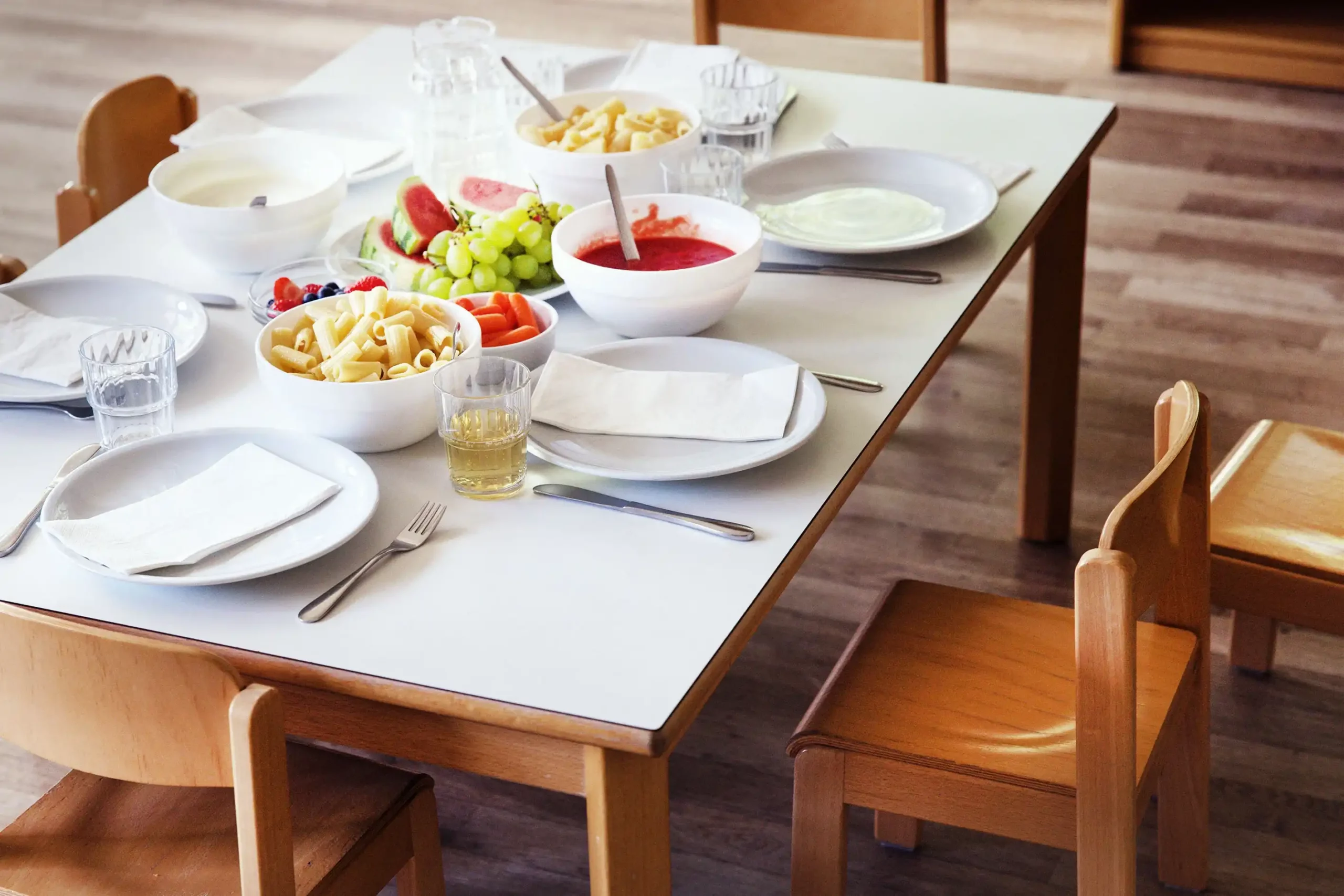
Public kindergartens are more affordable but offer a limited number of places. In Munich, municipal fees range between €100 and €250 per month per child. This already includes the state childcare subsidy of €100. In addition, there is a monthly catering fee of €105. Private bilingual kindergartens are more flexible but often more expensive. At cocon daycare, costs range from €492 to €1,642 per month after deduction of the state childcare subsidy. Additional monthly catering costs range between €62 and €190. In return, children benefit from a better staff-to-child ratio, well-equipped buildings and outdoor areas, and freshly prepared organic meals every day. Furthermore, bilingual education supports your child’s long-term educational path. A bilingual kindergarten is therefore an investment in your child’s future and well-being.
Frische und gesunde Verpflegung in Bio-Qualität im Kindergarten

Possible subsidies for bilingual kindergartens

Even if you choose a private kindergarten, childcare costs may be subsidized. In some cases, parents are entitled to partial or full cost coverage. Responsibility lies with the Economic Youth Welfare Office of the respective Social Services Center in Munich. In general:

  • Some private institutions are funded through Munich’s daycare subsidy program.
  • State subsidies such as the Bavarian Kindergarten Allowance reduce monthly fees.
  • Some employers offer additional financial support for childcare.
  • Subsidies through Economic Youth Welfare are always assessed individually.

Challenges and solutions

Although bilingual kindergartens offer many benefits, challenges may arise in individual cases. Parents play a key role in supporting their child’s language acquisition. It is therefore important to actively integrate both languages into everyday family life, as parents serve as central role models. Additionally, bilingual education may lead to temporary delays in language development between the ages of two and four. This is completely normal and occurs because children are developing multiple language systems at the same time. After this initial phase, children often acquire language skills more easily and quickly than monolingual peers.

FAQ – bilingual kindergarten Munich

What is a bilingual kindergarten?

A bilingual kindergarten is an institution where children learn two languages through immersion. Educators consistently speak their native language, allowing children to internalize both languages naturally in everyday life.

Is a bilingual daycare worthwhile?

Yes, bilingual daycare centers promote not only language development but also intercultural competence and cognitive skills. However, parents should ensure that the concept aligns with the family’s language situation.

How much does a private daycare cost in Munich?

The cost of a private daycare varies widely. In Munich, prices for a bilingual daycare range between €600 and €2,000 per month. State subsidies through Economic Youth Welfare and employer contributions can reduce costs.
<< 1 >>


This might interest you