


Inhaltsangabe / Table of Contents/Table des matières
You juggle work, family, and your child’s needs every day. Kindergarten opening hours play a key role in shaping your daily routine and how well you can balance family life and work. At the same time, they influence your child’s daily rhythm and overall well-being.
Many parents find choosing the right kindergarten model challenging. Opening hours are a central factor when deciding on the most suitable childcare option.
This text is designed to support you in making this decision. We explain common scheduling models and highlight differences between various providers, giving you a clearer idea of which facility best fits your family and your child.
Overview of Common Kindergarten Opening Hours
A kindergarten’s opening hours significantly influence both your child’s daily routine and your family life. It’s therefore useful to understand the differences between half-day, part-time, and full-day models. This helps you quickly determine which form of care suits your family and meets your child’s needs.
Comparing Half-Day, Part-Time, and Full-Day Models
Half-day care usually covers the morning only, from 8:00 a.m. to 12:00 p.m. Your child has time for play, group experiences, and introductory learning activities without the day becoming too long. Half-day models are especially suitable for families who want flexible afternoons.
Part-time care extends the kindergarten stay into the early afternoon, often until around 2:00–3:00 p.m. In addition to play and group activities, children participate in lunch and rest periods. This model offers a good balance between care and relaxation. Parents benefit from greater flexibility for work or appointments, while children experience a gentle transition between kindergarten and home.
Full-day care accompanies children from early morning until late afternoon. This model mainly targets working parents. Full-day kindergartens generally offer structured daily schedules with set playtimes, learning activities, lunch, rest periods, and outdoor time. Longer attendance promotes social interaction and fosters the child’s independence.
Choosing the right model primarily depends on your work schedule and childcare needs.
Differences Between Municipal, Religious, and Private Providers
Different providers emphasize various aspects when it comes to opening hours. Municipal kindergartens in Munich usually operate with fixed core hours. Religious institutions focus on rituals, community, and value-based education. Private providers often offer more flexible hours and additional care options.
When comparing options, it is worth considering the facility’s concept, quality, and additional services.
How Kindergarten Opening Hours Are Determined
Kindergarten opening hours depend on several factors, including staff availability, legal requirements, and parental needs:
- Availability of qualified staff and staff-to-child ratios: The number of professionals and group sizes determine how long children can be cared for. Appropriate staffing ensures each child receives sufficient attention and support, keeping the daily routine stable.
- Legal and municipal regulations: States and municipalities set minimum opening hours, staff ratios, and mandatory closure days. Facilities follow these rules but often supplement them with their own models to meet actual parental needs and maintain educational quality.
- Family needs as a planning basis: Working hours, commute times, shift work, or caring for siblings are considered in scheduling. The goal is a flexible model that eases parental stress while providing children with a reliable, structured day.
Extended and Flexible Care Models

Not every family can adhere to standard kindergarten hours. Work, commuting, or other obligations often require flexible solutions. Private kindergartens frequently offer extended care models, accommodating individual schedules while ensuring reliable care without adding stress for parents.
- Flexible drop-off and pick-up times: Many kindergartens in Munich allow parents to bring and collect children within a set time window, making it easier to coordinate family routines with work, school, and other obligations.
- Early and late shifts: Some facilities in Bavaria provide early or late care beyond normal opening hours, offering extra flexibility for working parents.
Quality vs. Opening Hours: What Parents Should Consider
While kindergarten opening hours are important for daily organization, the educational quality of the facility is just as crucial. Ensure your child experiences clear structures and consistent caregivers. Consider the following:
- Educational quality: The facility should offer age-appropriate and varied learning experiences, including play and movement activities, creative projects, and targeted social skill development. A stable daily routine should also include rest times, smooth transitions between activities, and attention to individual needs. This allows your child to thrive without being overwhelmed.
- Consistency of caregivers and daily structure: Children need security and reliability. A stable daily routine with familiar caregivers provides orientation and a sense of safety. Ensure your child regularly interacts with the same caregivers and experiences consistent routines. This stability not only supports emotional well-being but also fosters social skills and trust in the group.
Checklist for Evaluating Care Models
As parents, you want to make sure the kindergarten’s hours fit your family’s needs. Consider the following:
- Do the opening hours align with your family and work schedule?
- Does your child have enough time for rest and retreat?
- Are the caregivers stable and reliable?
- Does the daily routine feel clear, structured, and understandable?
- Does your child feel comfortable and safe in the facility?
During an introductory meeting with the kindergarten, the following questions can help assess care quality:
- How is a typical day structured pedagogically?
- What are the drop-off and pick-up times?
- How do you ensure caregiver consistency?
- What options exist for rest and quiet time?
- How are closure days distributed throughout the year?
Additional tips can help you choose the right childcare for your child.
Our Offering at cocon Kindergarten
Many parents face this problem: most kindergartens have 30 or more closure days per year due to holidays, bridging days, or staff training. Families must fully compensate for this absence, but most parents do not have enough vacation time. The result is organizational stress, makeshift solutions, or unpaid leave.
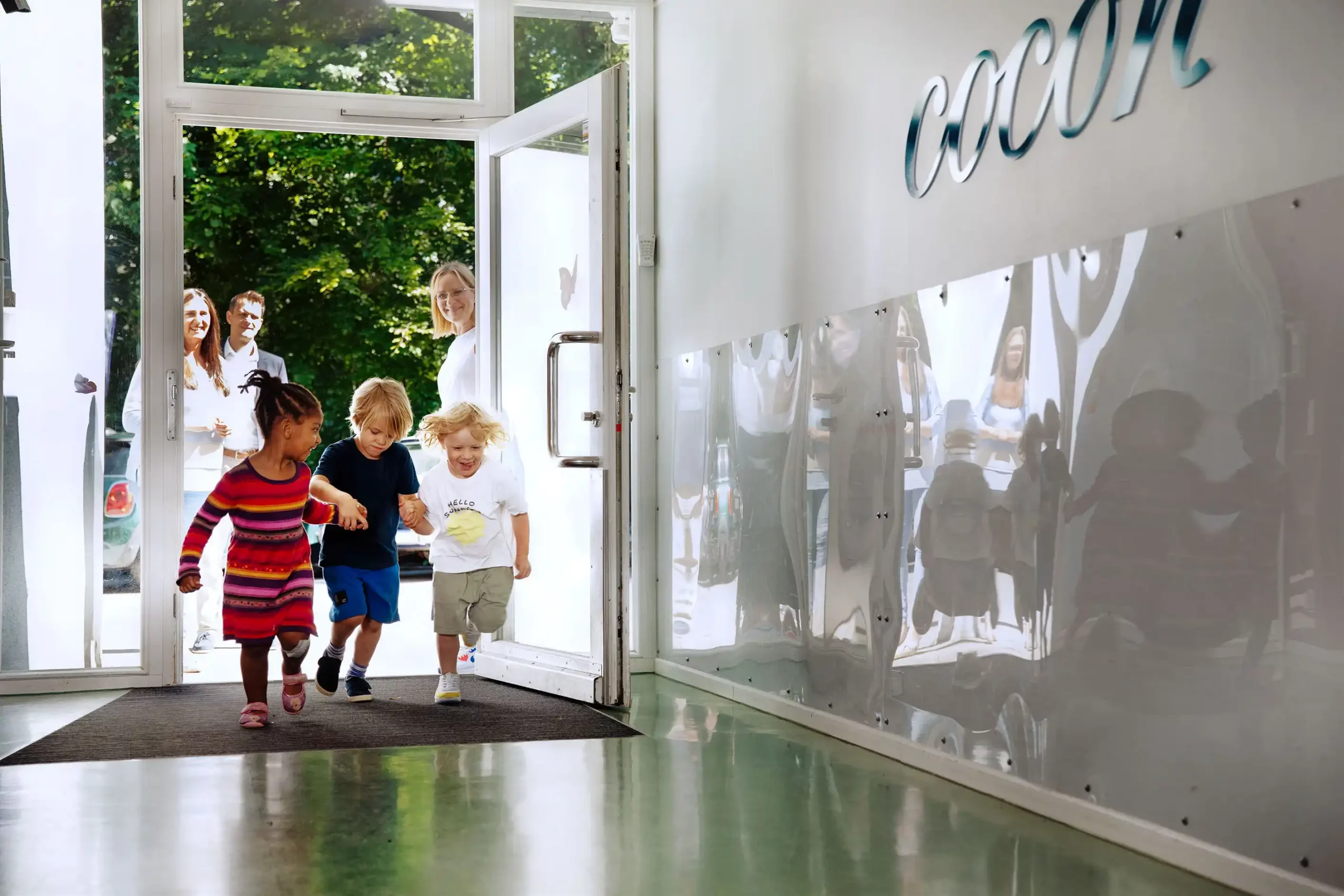
At cocon, we take a different approach. We see ourselves as a reliable partner for families. Therefore, our closure days are kept minimal and transparent. Normally, we only close between Christmas and New Year. This ensures real planning security for you and noticeably relieves families.
Our Munich kindergarten is open Monday to Friday from 7:00 a.m. to 6:00 p.m. You choose when to drop off and pick up your child, allowing the kindergarten schedule to integrate seamlessly with your day. At the same time, your child benefits from our educational offerings, combining play, movement, and social experiences.
Need extra flexibility? Simply contact us. We always find a solution that fits your family’s rhythm. Your child experiences a safe, stable environment where they learn and grow through play.
FAQ – Kindergarten Opening Hours
How long does a kindergarten need to be open?
There is no nationwide minimum opening time for kindergartens. Hours usually depend on the federal state and the provider. Typical care hours are from 7/8 a.m. to 4 p.m.
Are 10 hours at kindergarten too long?
For many children, 10 hours in a row can be very long. Experts often recommend 7–8 hours as child-appropriate care. If a child cries frequently or gets sick often after long days, reducing the care hours makes sense.
How can you tell if a child is unhappy at kindergarten?
Possible signs your child is unhappy include:
- Persistent crying or strong separation anxiety over a long period
- Withdrawal, unusual aggression, or frequent tantrums
- Sleep or eating problems, frequent stomach or headaches without medical cause
- Noticeable changes in behavior or developmental setbacks
- Refusal to go to kindergarten
How many closure days is a kindergarten allowed?
There are no nationwide rules for the number of closure days. Some federal states allow up to 30 days per year, others 27 or fewer. Parents are generally entitled to emergency care.

